 build:power:repeat
From waste to power.
Green by design: closed-loop energy production on a local scale – nationally
Ximo Power offers a repeatable and transferable model for converting food waste into clean local energy while rewarding customers for correct waste handling.
One integrated circular-economy model
Ximo Power is a proposed local food-waste-to-energy system designed to convert domestic and commercial food waste into dry biofuel powder at the point of origin, before transporting it to a silent local power plant. The system combines Ximo bins, an app-based rewards platform, AI-supported EV collection vehicles, solid oxide fuel cell power generation, EV charging, biochar production, and carbon-credit value into one integrated circular-economy model.
The Opportunity
Wet food waste is costly and unpopular
Food waste remains costly to collect, difficult to manage, and unpopular when processed through traditional waste infrastructure. Wet food waste creates transport weight, odour, storage, contamination, and public-planning challenges. Ximo Power addresses these problems by reducing food waste volume by 90%, removing moisture, and converting it into a usable dry biofuel before collection.
Simple Installation and Operation
Plug it in and go
The Ximo bin is designed for simple installation using a standard 13-amp plug. Power demand is split between daytime food reduction and night-time drying, helping avoid complex installation requirements. The intention is to make deployment straightforward for kitchens, commercial premises, homes, and shared community locations.
Customer Proposition
Customers are rewarded for clean waste
Commercial customers pay a fixed monthly cost of £120, with daily collection available when required. Domestic customers would pay a low monthly app fee. In both cases, the customer is rewarded for clean, contaminant-free biofuel through the Ximo Power app. Points can be used for benefits such as EV charging.
£120 / month
Fixed monthly cost, with daily collection available when required.
Low monthly app fee
Rewards for clean, contaminant-free biofuel, spent on benefits such as EV charging.
App-Based Contamination Control
Clean biofuel earns, contaminated material loses value
The points system is a core part of the operating model. It gives customers a direct financial reason to sort food waste correctly and avoid contamination. Clean biofuel earns rewards, while contaminated material loses value. This transfers responsibility for clean waste to the source and protects the quality of the material before it reaches the Ximo Power plant.
Collection and Logistics
Collected by area and by demand
AI-supported EV vans collect dry biofuel powder by area and by demand. Commercial premises may be collected daily, while domestic and community collections can be scheduled according to volume data. Pressure information from the Ximo bin supports collection planning, and the van’s AI array checks the biofuel during collection.
The Ximo Power Plant
A power plant that doesn’t look like one
The Ximo Power building is intended to operate without the external appearance of a traditional power plant. The design removes visible chimney stacks and flues, operates silently, and incorporates public-facing uses such as indoor EV charging and an artisan coffee shop. A solar roof array forms part of the site design, reducing the visual impact of conventional industrial infrastructure. The design does not require a grid connection, consumes no water and emits no pollution.
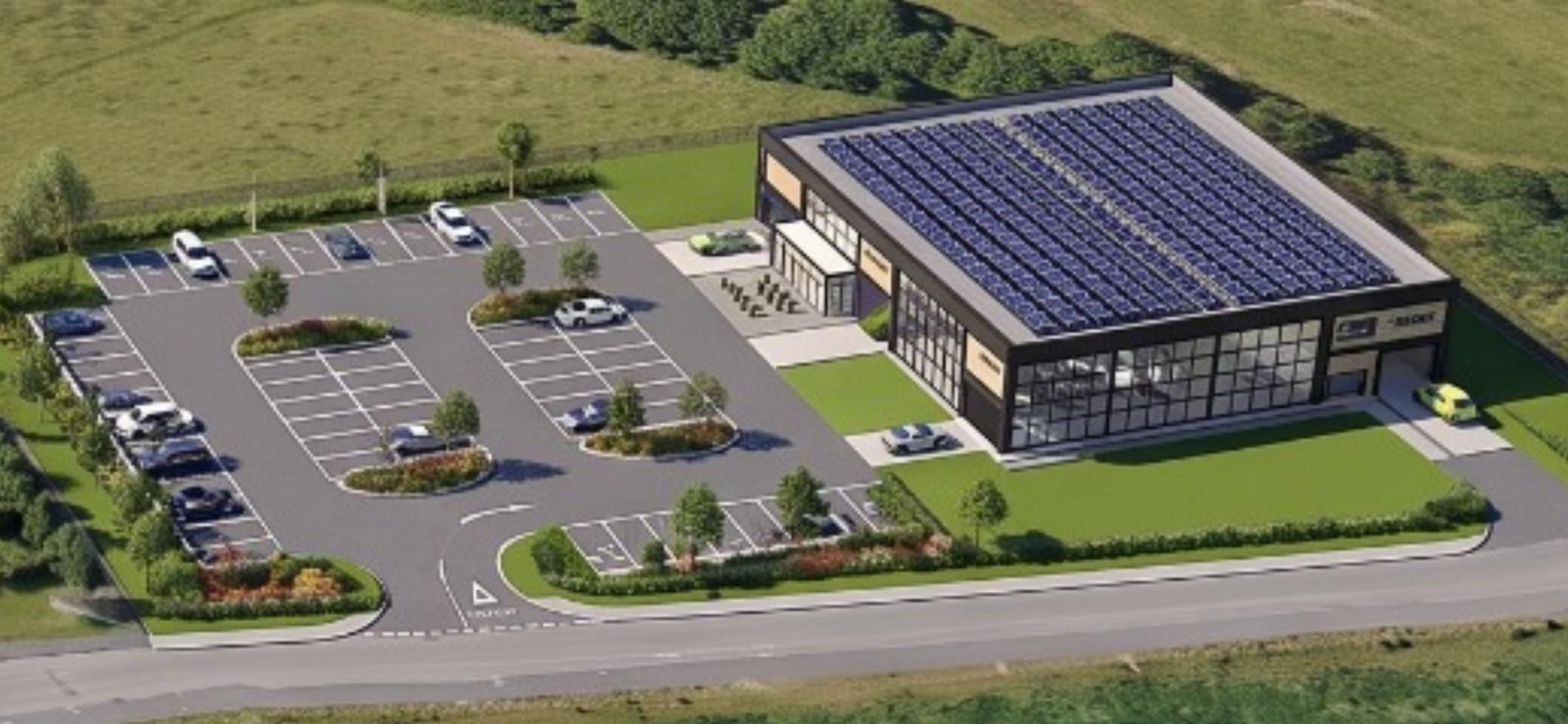
Technical Energy System
Syngas, fuel cells and storage
The initial site will operate a single 0.5-tonne-per-hour Ximo Power plant generating 1 MW continuously. The system uses an 800°C biofuel rotary induction reactor with steam injection to produce high-quality syngas, powering two 500 kW solid oxide fuel cells and two 1 MW storage batteries. Biochar is produced as an additional output.
single Ximo Power plant
generated continuously
biofuel rotary induction reactor with steam injection
solid oxide fuel cells
storage batteries
produced as an additional output
Capacity and Scale
Small sites, repeated
One site of this size will serve approximately 25,000 households and around 450 commercial outlets. These small-form factor, low-impact sites can then be repeated to create a network of collection and EV charging. This approach is ideal for all communities and can be rolled out to meet regional objectives at the county, state or national level.
BUILDPOWERREPEAT
Competitive Difference
Not a traditional waste station
Ximo Power is not designed as a traditional waste station. The conversion of food waste into dry biofuel is carried out by customers before collection, meaning the site receives dry material rather than wet waste. This reduces heavy vehicle movements, odour, storage requirements, planning concerns, and public resistance. The model also creates value through energy generation, EV charging, biochar, and carbon-credit opportunities.
Ready to get started?
Households can subscribe today. For commercial customers, get in touch.